
Yes, unless something has occurred since these words were
written, your eyes are not deceiving you – the B.B. is a pale blue colour.
The reason is not political. It is merely due to the fact that to obtain greater opacity without
greater cost, a tinted paper is the answer and, of all the colours tried out,
blue seemed to be the most opaque. Not
quite true, on second thoughts – a vivid orange colour was best, but we decided
to spare your feelings!
Again, if rash prediction is correct, this should be the
biggest B.B. ever to have been printed – bigger in fact than some issues of the
Wessex Journal. Whether the quality is
as good is, as they say, open to doubt. At the time of writing, we have no cover so what you have just been
looking at (if anything!) is a mystery to us at present and since this is being
written only one week from the publication date, this is causing a headache at
present!
However, we hope these and other problems will be solved in
time, and take this opportunity, as is our custom at this time of the year to
wish all club members; all B.B. readers and all cavers everywhere..
A Merry Christmas
The Day Expert Potholer Became Trapped In A Chair
From the daily mail of Friday, November 15th, the following
article appeared: –
It took 90 minutes to rescue caving expert Alan Keene when
he got stuck in a chair.
Mr. Keene, 19 was giving a demonstration of the way an
experienced potholer should crawl through narrow rock passages. He wriggled himself halfway through the
chair, then could not move.
A crowd of 100
the Murray Hall to watch the demonstration cheered as members of the University
Caving Society set to work to free him.
FIRST they tried to dismantle the chair with a screw driver
as coffee was served to Mr. Keene. THEN
a student fetched a hacksaw, but a plan to free Mr. Keene by sawing the chair
to pieces was vetoed by the warden.
THEN Mr. Keene had his clothes removed, but still he was
stuck. FINALLY he escaped by being
covered in soap.
Mr. Keene said last night, I’ll never live this down. It would not have been so bad if I’d not been
a potholer myself but who would have thought I’d have got stuck in a chair.
Certainly-not us! and we hope Mr. Keene will forgive what
follows – a bit of gentle chair leg pulling
A Little too
Keene
(A Weegeeode by Nick Carter.)
A Potholer called Alan Keene
Had been where many have not seen.
He’d crawled for miles upon his knees
And passed through many a sev’n inch squeeze.
His telling of his feats of glory
Seemed just an ordinary story
To caving friends who’d done the same
Themselves, and not found any fame.
But Alans need for admiration
Soon brought about a situation
Where he regaled his friends at college
With stories of his skill and knowledge.
And on one wet November’s night
He’d spun his yarn to the delight
Of all save one bold undergrad
A rather sceptical young lad.
He said “I cannot quite conceive
How through such small holes you can weave”
He claimed the tale was quite absurd
And challenged
to prove his word.
Now Alan Keene was quite put out
To hear this lad express a doubt.
His active mind sought for a plan
To silence this outspoken man.
He then recalled a strange device
Evolved by caver’s artifice
A squeeze machine composed of blocks
To represent adjacent rocks.
These wooden blocks could be adjusted
And though not stalagmite encrusted
Gave hours of pleasure to the caver
All in the dry, and thus found favour.
But though the college was prolific
In apparatus scientific
Our Alan knew he’d never seen
In Murray Hall a squeeze machine.
He looked round for a substitute
To keep his name in good repute
Until his gaze fell on a chair
“Aha!” he said, “I’ll crawl through there”
The chair back it was measured then
Twixt seat and bar scarce twelve by ten.
Into this hole, so it is said,
The fearless Alan placed his head.
His
arms were next and, growing bolder,
He wriggled through each manly shoulder
And did not take a seconds rest;
Until the chair had passed his chest.
His twisting movements were unhurried
Until he suddenly looked worried,
A stifled curse escaped his lips
“Can’t get the
… past my hips!”
He writhed and wriggled half an hour
Until his muscles lost their power.
Although his antics were contortive
It seemed his efforts were abortive.
One friend said “Alan, for a fiver
I’ll set you free with my screwdriver!”
“I’d rather that you pull some
Than use my buttocks as a fulcrum”
Another student farther back saw
A chance to use his trusty hacksaw
The Warden entered with a shout
The fool got in – let him get out!”
That chair must not be mutilated
Be he for aye incarcerated
Let’s put an end to all this racket
He’ll soon get out without his jacket.
With all the onlookers in stitches
Our hero took off coat and breeches
Once more he struggled to get free
With cries of, “Oh, calamity!”
Next, causing further interest,
He shed his pants and his string vest.
Then stood he nude before that horde
Save for his chair and mortar board.
thanked his creator
The Dean was no co-educator
But he could not forbear to blush
When someone said, “I think you’re lush”.
Then said a don The situation
Seems to demand some lubrication”.
Of this there seemed but little hope
Till someone else suggested soap.
A humorist said Use Camay
Then he’ll look lovelier each day”
They covered the unwilling bather
From head to foot in scented lather.
This luckless speleologist
Gave one more rend’ring of the twist
The crowd gave out a mighty roar
As chair descended to the floor.
When Alan had regained composure
And dried, and covered his exposure
He swore no more, for good or ill,
To boast about his caving skill.
Now students all, and cavers too,
A twofold moral comes to you.
Don’t boast too much – and here’s the crux
DON’T GO BELOW WITHOUT YOUR LUX!
in Llanelly Hill Quarry” />
A New Cave Near Brecon
A small vertical hole in Carboniferous limestone was
observed by Mel Davies of British Nylon Spinners a few weeks ago, after he had
seen signs of stalagmite on a wall in a quarry opposite Aggy Aggy. A couple of evenings digging there and the
removal of assorted rocks revealed a rock wall with strong water scalloping,
and interest rose further when a short space between rocks at the bottom was
found to lead to the top of a deep rift. The top of this rift was about fifteen feet below ground, and was
blocked with rocks which had to be removed before exploration could
continue. Encouraging signs were that
small stones tossed down could be heard to fall a considerable distance before
coming to rest, and the draught blowing up the rift was strong enough to douse
a good flame on a carbide lamp.
Accordingly, on the 24th of August, a small party consisting
of Mel Davies and Russell Sullivan of B.N.S. and Jill Rollason and Norman Tuck
of B.E.C. arrived with digging equipment and set to work. About five hours work was put into cleaning
the rift – mainly by knocking the stones down towards the bottom and praying
that they would not block anything of importance. At last Russ reported that the way looked
clear enough to take a small one, and let himself slip into the depths of the
rift.
It appeared that, on average, the rift was about eighteen
inches wide; more or less vertical, and about five feet wide at the top,
gradually widening in this dimension as it descended. About ten feet down was a constriction, and
after passing this very tight squeeze, Russell found that the rift continued
vertically in the same line for another fifteen feet or so. At this point, to his great disappointment,
his lamp began to run out and he had to return for a refill. Meanwhile, thirty feet of ladder were
optimistically lowered and the rest of us tried the rift for size but only Russ
and Norman were able to pass the first constriction and thus explore the first
part of the cave on this occasion. They
reported that at the bottom, the way continued as a rift shaped stream passage
– both upstream and downstream. Choosing
the downstream passage, they followed it until they came to a very deep pot
stretching across the end of the passage. Thirty feet of ladder were lowered, but when they climbed down it, they
found that it was quite inadequate. Russ
returned for more ladder while
did some very necessary gardening around the edge of the pitch. When the ladder, now sixty feet long, was
placed in position, it was found that it ended in mid air with boulders just
visible below. Another hole which could
be seen among these boulders suggested that they were but a false floor with
the pitch continuing below them.
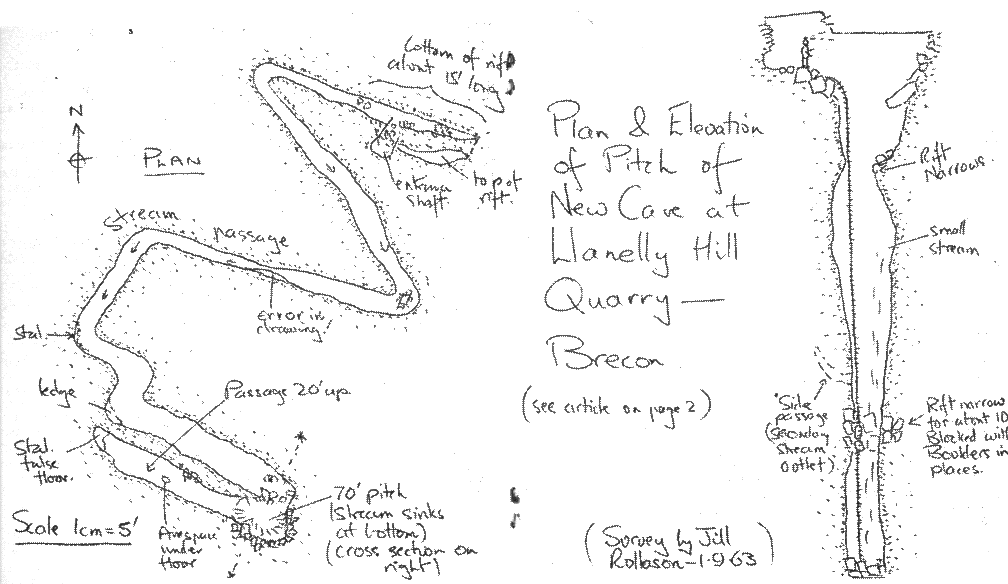
With hopes of something really spectacular, we four, with
Bill Little and two other members of S.W.C.C. repaired again to the cave on the
1st of September, equipped with an optimistic quantity of ladder and a
pessimistic quantity of explosive. Bill
blasted the squeeze in the entrance rift until the constriction was about three
inches wider and, after only a few minutes wait to allow the fumes to clear, we
were all able to attempt the entrance rift.
At the bottom of the rift, about twenty feet down, we met
the stream passage which was horizontal, strongly scalloped and having a small
trickle of water along the bottom. This
passage is about eight feet high, two to three feet wide at this point, and
continues for two or three hundred feet to the pitch. Although the strata on the surface tilts at
an angle of about twenty degrees, the rock beds seem to have flattened out at
this depth, and the passage makes its way in a series of sharp bends,
ornamented occasionally with very dark stalagmite, including straws. Since some of these reach within a few inches
of the ground, it is thought that the stream does not rise much after rain but
there were no obvious flood marks to provide any indication. The trickle of water eventually falls through
the boulders at the edge of the drop.
This is about seventy feet deep and is a pitch through the
roof of a great rift passage about sixty feet high which leads away to the side
into darkness. The ladder passes through
two narrowings of the rift (the stream is met in the lower one) and boulders
are trapped in the rift at intervals. The more unstable ones have been pushed to the bottom, but more
gardening is needed. The whole rift has
deep vertical grooving.
To our great disappointment, this apparent rift passage
ended abruptly after about thirty feet, and another passage which could be seen
about twenty feet above also proved negative. The entrance of the upper one is about four feet square, but this
passage runs in for a few feet and ends in a high aven from which comes a
tributary of the stream. The bottom of
the great rift is covered with very large boulders and there is an interesting
false stalagmite floor at the far end revealed by an earth fall the rift is
between four and seven feet wide at the bottom.
The obvious way on at this point is under the boulders and
following the rift down, which would probably entail the removal of very many
large rocks. Air space can be seen at
one point through the floor and there is another possible dig in earth and
stones to the side.
We returned up the ladder and found that the stream had
doubled its volume since we had descended. Passing the lower part of the rift was a rather drenching
procedure. Norman and I continued to the
bottom of the entrance rift to have a look at the upstream portion of the
passage which was the only remaining prospect. This again proved negative. The
apparent passage was seen to be the bottom of the entrance rift over which one
traverses to reach the surface. A small
passage about a foot high does lead on, but it peters out after a few feet.
We met a quarry man outside who remembered working this part
of the quarry. He said that they had
broken into a large chamber over what is now the floor of this section of the
quarry, and described it as big enough to hold a double decker bus. There are obvious water worn passage marks
now on the quarry face, but we could not determine whether these were part of
the chamber described by the quarryman, or part of another feature. Possibly the latter, since the quarryman
pointed to an area nearer the valley edge for the site of the chamber.
Two other cave entrances in this quarry face might be worth
digging, but would possibly connect with the upper part of the cave. A really accurate survey would be
informative.
The cave thus ends disappointingly soon, and much work would
probably be involved in extending it, but it might repay the effort as there it
still quite a depth of limestone to go. It does, however, add another fine pitch to the few known in
in this caving area.
Jill Rollason
A
B.E.C.
Type
Cave
Report
Though Christmas comes but once a
year
Consider this, when drinking beer
That any time, there can be bought
A Survey – or a Cave Report
From B.M. Ellis,
Fore Street
Petherton
Or you may find, if it’s not shut,
Him often at the Shepton Hut.
So surely, at this festive season,
Each one can find sufficient reason
To buy himself – Oh, Merry Thought!
Trips from the Caving Log

Extracted by John
Ransom.
On August 1st, a short
Aileen Etc. Hunters Hole was extended by
digging on the 5th by I. Dear, K. & P. Franklyn, P. King, R. King, P.
Miller and D. Reynolds. Result, another
thirty feet of passage below the ladder.
St. Cuthberts party on the 10th August in the Maypole
Series reported that the stal flow over gravel in Escalator Passage has now
collapsed and ask if anyone remembers it intact on their last trip. The 10th of august also saw the start of
digging in Castle Farm Swallet.
A trip to Balch Hole on the 11th, reports that the group of
straws known as the Golf Clubs at the end of Erratic Passage has been destroyed
by some ***** who has used them to hang mag. ribbon on!
Further work was done in Alfie’s Hole on the 11th by a party
removing boulders from the rift. Also on
the 11th, two working trips in Cuthberts took place. One party dug at the end of the passage
behind the Dining Room while the other dug at the beginning of Sewer
Passage. Progress 8 feet and 11 feet
respectively.
From the 13th to the 16th of August, a party consisting of
Roger Stenner, Pete Miller, P. Morrell, Pete Bird and T. Burke went over to
Ystradfellte where they surveyed an unnamed cave and part of another known
one. Roger Stenner found a new cave,
then Pete Miller found a new section of another, then found a resurgence with a
sump. Roger Stenner, P. Morrell and T.
Burke surveyed the cave found by Roger Stenner while Pete Miller surveyed the
extension found by Pete Miller. Meanwhile, Pete Bird found another cave in a place dug unsuccessfully
the previous day, then John found another cave, the most extensive of those
found so far. Photography then took
place in all these new caves.
The caves are in the most unstable rock seen by Roger
Stenner and Pete Miller since Tankard, in fact in many ways they are far more
dangerous. The party finished by padding
around Porth Yr Ogof etc.
Pete Miller reports that during a Cuthberts trip on the
18th, the wire came off at Stal Pitch and says Please be careful. Also on the 18th, digging took place at the
sump and Steve Wynn Roberts made two dives.
On the 21st, Gaff, Kevin, Pat Takle, Pete Page and 2 others
report that they have found the site of a gigantic system? at Westend, near
Chewton Mendip. Removing slabs and
debris, Kevin was sent down to recce. About twenty feet down the shaft was found to be in a dangerous
condition. It was followed for 95 feet
approx and is blocked at the bottom. It
is thought to be an air vent associated with a mineshaft.
Another go at the flake in the new entrance at Cuthberts
was had by Roy Bennett and Keith Franklyn on the 21st. They report that it was not completely
successful and that care is still required. On the 23rd, more digging at Alfie’s Hole, followed on the 24th by a
trip to Sandford Levy, and further digging in Castle Farm Swallet.
On the 27th, R. Stenner and Pat TaHe surveyed old and new
digs from Hunters – Castle – Punchbowl following the line of depressions to
Lamb Leer. They report that Vee Swallet
is now in a bad state. This was followed
by surveying in St. Cuthberts from Mud Hall via Mud Hall Pitch to stream. Roger reports wonderful surveying conditions
and Brian Reynolds went into a new bit of cave just below the Water Chute and
reports that there is a chance that this is a new bit entirely.
Highways and Byways of Cuthberts
Long Chamber Extension and the route, to Coral Chamber.
The other evening, I had the pleasure of accompanying a well
known caving gentleman on a very enjoyable trip to one of the less visited,
though of late much talked about, parts of St. Cuthberts. We had started out with the intention of
visiting several parts of the cave in order to renew, or in some cases, make
our acquaintance with them and the first on our list was Long Chamber
Extension.
We started out at a leisurely pace, wondering as we
descended the Entrance Rift whether we would be able to get out Again, since two very industrious fellows
were working in the new entrance and we could well imagine the Rift being full
of mud and boulders on our return. However, we moved on to the first ladder and the sound of water met our
ears. How pleasant this was. (This although only lately received for
publication, must have been written some time ago! – Ed.) Of late, the caves of Mendip seem to have had
their own private drought for we have not had a dry summer and yet the
refreshing sound of tumbling water has been absent from both Swildons and Cuthberts. And so, with this music in cur ears, we
descended the Ledge Pitches, quickly avoided the waterfall at the bottom and
turned into the Wire Rift. We made our
first stop in Pillar Chamber. It seeing
to me that this is a much neglected part of the cave, so many people must pass
on to the deeper objectives and, apart from a quick glance at the pillar, miss
the many fine formations in this chamber. A careful climb over some broken stal to the left will reveal a
beautiful cascade, some tempting high level passages and a bird’s eye view of
the way on. If you have only an hour or
two to spare, I can well recommend a trip just as far as this point in the cave
– pausing to look where before you hurried by.
One further stop by the side of Katchenjunga for a drink and
fresh water in our lamps and we were soon climbing up into Long Chamber. Traversing diagonally across the slabs, but
keeping higher than the usual route to the vantage point over looking Curtain
Chamber, we slid under the far wall into the tight clamber up into the
Extension Chamber. It is always a little
exciting to enter a big chamber after a tight crawl and one can sense the
thrill of discovery as one stands in such a chamber a little off the beaten
track. Long Chamber Extension is very
similar to September Series, a steep floor strewn with the shattered stal flow
which indicates the recent movements of this area of the cave. Having taken our fill of the chamber as a
whole, we climbed to the top and worked our way along. A number of large boulders enable one to
climb very high into a rift separated from the main chamber by a rock wall, but
opening again at the far end to give an aerial view of the boulder strewn
floor. In the right hand wall, a small
passage-leads up through a squeeze and over some wet stal. This may be followed for some way until it
eventually tightens up, and contains some fine straws and crystal pools.
At this point we decided to have a look at the further
extension investigated recently by John Cornwell. We straddled the rift and moved back over the
climb up, keeping at the same level and eventually moving into a bedding plane
on the left. This bedding plane lies on
top of the rock wall which separates the rift from the main chamber and slopes
upwards over the chamber quickly becoming too tight for any further
passage. In the right hand corner, and
directly over the rift are two avens, the furthest of which contains a strong
draught and is blocked at the top by a number of unstable rocks. Having removed a few of these and sent them
hurtling down onto my feet, my companion decided that it was a fruitless task
and to my relief we descended into the main chamber to continue our journey.
Following the chamber along at the most obvious level, now
ducking under, now clambering over huge boulders of fallen (or in some cases,
falling!) rock, we eventually reached a final chamber. At the bottom of the end wall there is a bank
of mud similar to that found on the way from Everest to Traverse Chamber. The rest of the floor consists of a boulder
ruckle and our way on lay down through these clean sharp boulders. This route reminds one of the boulder ruckle
in Eastwater except that it is dryer and the rock is light grey in colour. Also scattered about at this point are small
stones which are get black on the outside but sand coloured inside. I have always been attracted by these objects
because of their unusual lustre, but as with most shiny things underground, it
is only the wet surface which imparts this and they are quite dull when
dry. They are unusual objects and very
useful as
to mark the way through a strange boulder ruckle. If anyone can explain their composition, I
would be very interested to know.
We continued our careful way down through the ruckle,
passing through a couple of ‘chambers’ and eventually entering a final chamber
in the form of a wedge shaped rift which tightens up at the bottom and has a
sandy fill giving a floor about six inches wide. At this point we decided that although Coral
Chamber must be around here somewhere, we were fated to go out the way we came
in and so we turned round and made our way back. However, before we were out of the boulders,
we noticed a large round hole in the muddy side of the ruckle. We scrambled through and were rewarded with
the prospect of Coral Chamber.
Now we could go out through that interesting squeeze into
the rift that leads to Annexe Chamber provided, of course, that I could find
the exit! For some reason, I was sure
that the passage was at the bottom of the chamber and after searching the walls
a couple of times, I was forced to the conclusion that I didn’t know the way
out.
However, the round trip would be very rewarding and one I
can well recommend for passing a few hours on Mendip. Care must be taken when crossing Long Chamber
as broken rock, of which there is now quite a lot will, if carelessly
dislodged, fall down into Curtain Chamber and damage the formations. Next time I will go in via Annexe Chamber so
that I know the way out.
Mike Luckwill.
The Underground Laboratories of Moulis
by Mike Luckwill.
It is only in recent years that cave exploration has been
considered to be a separate branch of science and during the 17th 18th and 19th
Centuries it remained in the nature of a hobby. However, the early explorers soon realised that many interesting
discoveries were to be made in the caves and grottoes, not only in the fields
of prehistory and palaeontology, but also in that of biology.
As early as the 17th Century it was known that the grottoes
of Camiole on the borders of
contained a strange amphibian, the elm, different from any animal found above
ground. A scientific description of it
was made in 1781 by the Austrian Laurenti who gave it the name Proteus
Anguinus. Some fifty years later count
Franz von Hohenwart found, again in the Grotto of Camiole, the first blind cave
beetle, the Leptodirus Hohenwarti.
At first these investigations were carried out by a number
of enthusiasts, working in isolation, but early in this century the Rumanian
scientist Racovitza with a French colleague Rene Jeannel set up an organization
Biospeologica, to encourage the collection of specimens of cave fauna and the
publication of results and observations. The next step was to make a laboratory study of the life of the cave
dwelling arthropods under natural conditions. It seems that the first underground laboratory was designed by a
Frenchman, Armand Vire, who in 1897 fitted up one of the galleries in the
catacombs which stretch under the Jardin des Plantes in
floods of 1910 when the water swept through the catacombs. Twenty years later another laboratory was set
up, this time in one of the galleries of the grotto of Adelsburg, part of the
Carniole system, but the ambitious research programme never seems to have been
carried out.
In 1945, the French Association for the Advancement of
Science met in
founder, together with Racovitza, of Biospeologica. He called for the creation of a cave
laboratory in
and obtained the support of the Centre National de la Recherche Scientifique.
The grotto of Moulis, containing a perpetual spring, close
to a source of electricity and a small village suitable for accommodation was
chosen as a suitable cavern. The natural
entry was a small passage which necessitated crawling. As this passage was inhabited by a large
number of Choleva beetles during their period of metamorphosis, it was decided
to leave it intact and to bore a tunnel 50 metres long a short distance
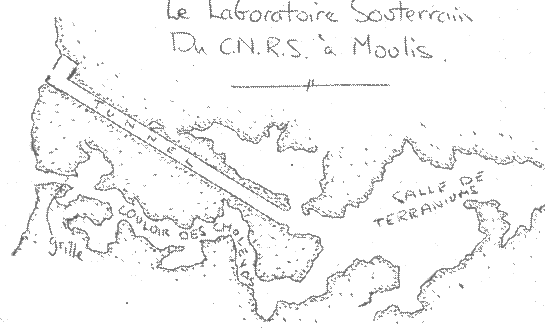
away. The new entrance led into the main
gallery which at the time ended in a narrow tunnel too small to enter, another
tunnel was bored at this point and a further long gallery was discovered. The length of the accessible part of the cave
was thus increased to 900 metres.
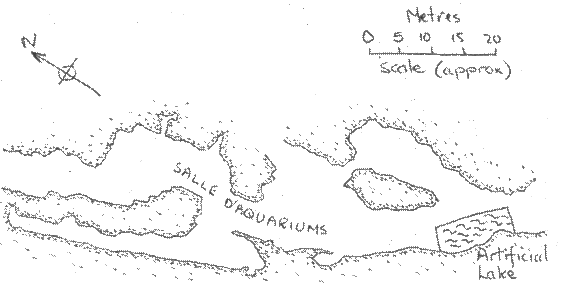
The whole gallery was fitted up to form three units. Two for the study of the land-living
arthropods and one housing aquaria for the water arthropods. Electricity and compressed air lines were
laid on and drains built to eliminate waste water and flood water. A surface laboratory was also built
containing two controlled temperature rooms and a photographic unit.
Although the new research institute, the ‘Laboratoire
Souterrain de Moulis’ intends to cover a wide field of studies; measurement of
ionisation in cave atmospheres; hygrometric and thermometric investigations:
research on crystallization and the formation of stalactites and stalagmites
etc., the present programme is mainly concerned with the investigation of the
cave dwelling arthropods; their physiology, reproductive cycle and behaviour.
Among the cave dwelling Cloeptera which have been bred
successfully in the laboratory are the Speonomus Longicornis and S. Diehki
beetles, which have a curious-life cycle. The female lays one enormous egg every forty or fifty days. The primary larva is only active for a short
period varying between a few hours and a few days. Without having eaten or undergone any
mutation, the larva builds a cell in which it enters a state of rest, lasting
for months and ending with pupation and transformation into adult form. Having perfected work of breeding,
consideration of the genetical problems of the many different species, and
subspecies should provide many valuable results in the field of evolution.
Work on physiology was successfully directed towards the
problem of absence of pigmentation and blindness (in some cases absence of
eyes). The first naturalists to examine
cave fauna assumed that these features were directly attributable to the fact
that the animals lived in darkness. However, some species which lived in the cave habitat possessed
pigmentation and normal vision and conversely de-pigmentation is found in some
animals which live in the light. In
1931, Professor Fage, taking as his starting point work by Mayer and Plantefol
showing that the respiratory rate of mosses decreases with increase in water
content, put forward the view that the cave spider, living in a very humid
atmosphere, must have a very low oxidation rate which would lead to
de-pigmentation. Work carried out at
Moulis some ten years ago has confirmed Fage’s hypothesis. Another discovery made during the last
fifteen years concerns the result of breeding tests carried out with Niphargus. Young Niphargus supplied with all the
nourishment it was presumed the species might require died during their second
moult. Others supplied only with cave
clay outlived them, although not living as long as the normal lifespan. Further work with the electron microscope
showed the existence of a new baeterium – named Perabacterium Spelai – which
fixes atmospheric nitrogen and derives its carbon from ferric carbonate. Its energy is said to come from the decomposition
of ferric carbonate to ferrous oxide. Thus a sequence of nutrition may well exist independent of any supplies
from above ground.
Much work still remains to be done on these as yet
unfamiliar cave animals, and it is the research carried out at Moulis and
elsewhere that may well provide important clues in the investigation of
evolutionary processes.
CRO Conference
Report on the Third Conference of the Cave Rescue Organisation
Organisations held at Church Hall,
Lion
Street
Street
Our hosts for this conference were the South Wales Caving
Club, and the agenda consisted of four main items, the first of which was
concerned with the subject of cave accident statistics.
Dr. Evans has put in some interesting work on accident
research. By recording all the particulars
of all the accidents he has heard of on punched cards, he has discovered two
main causes of such accidents. Firstly,
those due to cavers not using a lifeline – these should be used on any pitch of
twenty feet or more and, if the climb is exceptionally difficult, even on
climbs of less than twenty feet. The
other main cause was due to equipment deteriorating. All tackle should be inspected at least once
a year, a fact which some clubs did not think of until too late. A query was raised as to how a rope should be
tested. The answer was to cut it into
two foot lengths and inspect every cut. The speaker did not recommend a use for the resulting two foot
lifelines! The main wear on a rope is
usually at each end, where it is continually tied and untied, so another
suggestion was to cut fifteen feet off each end and keep the middle.
I understand that the South Wales Caving Club has the most
complete cave rescue kit in the country. It includes a coffin, should the rescue party fail.
The second item on the agenda concerned the subject of
rescues in
cavers are in
Ireland
little experience, as yet. Outside help
is hardly practicable due to the cost of chartering a plane (cash in
advance). It is quite probable that the
R.A.F. would be unable to help. Certainly they would not land in the republic. Parties who go to
understanding that if they get into trouble they must be equipped to deal with
it themselves. They are requested also
to contact Brian Baldwin,
Norfolk Avenue
Lanes before leaving – sending an accurate address where they can be contacted
and the total number of cavers in the party. If all parties do this, it will do much to ensure that, in the event of
trouble, a rescue party can be on the scene as quickly as possible. There is a small dump of rescue equipment at
Enniskillen, Co. Fermanagh, and Dr. Lloyd has promised that the M.R.O. will set
up a similar one at Ballynalacklan Castle, Lisdoonvarna, Co. Claire. Should outside help be needed, contact the
local Guarda, they have received instructions as to who to contact. Dr. Lloyd recalled an occasion when some
members of the U.B.S.S. got into difficulties and shouted for help, frightening
the locals who thought it was the ‘little people’!
The third item on the agenda was the formation of a national
cave rescue organisation. There was a
lot of discussion on this topic, but no decision was made as there seemed
little point in the idea. It would
create many new problems and solve very few existing ones. We were also given the impression that it
would require lots of money that, even if raised, could probably be better
spent.
The final item was the reading of the report by the
Yorkshire Ramblers on the International Conference in
one affiliated to the Red Cross. It runs
a couple of ambulances, and they can reach any part of the country in three
hours of an alert.
The long discussion gave us a good appetite for dinner,
which was at Perrins Restaurant, just outside Brecon. Moving about after the meal was thus
difficult. It was a good job that the
bar was close handy! Sunday was
miserably wet for the demonstrations, which were held behind the S.W.C.C
Headquarters. The exercise was to blast
a new entrance to
of rock. This was entirely
successful. The afternoon saw a
demonstration of a new type of electromagnetic position finder (this has, in
fact, been mentioned in the B.B. some time ago – Ed ). It was placed in
from the surface by using a detector coil and headphone unit with a high degree
of accuracy.
Tony Philpott.
On The Hill
by Stalagmite
For the Christmas Article, several thoughts flickered
through what I am forced to call my brain, and the outcome was that a review of
the club’s activities as seen through the pages of the B.B. during the year
might be interesting, so here goes:-
January:
Noted for the great snowfall, the
shortage of stuff for the B.B. and the very fine photograph on the back page
with promise of more to come.
February:
An article appears on how to
write an article. From this indirectly
came ‘On the Hill’ and it’s nice to know that occasionally an editor’s efforts
are read. The club has already held a
caving meet and a notice in the opening pages announced that tackle was to be
removed from Cuthberts Stal Pitch. I
understand that only recently a Leaders’ Meeting decided to do just that in
November. No photograph, of course,
appeared on the back page of the B.B.
March:
Seems to have been one of the few
months when births occurred, and we read that Steven Brewer and Jonathan King
were born. Also born in this merry month
was a certain nefarious article which for the sake of anonymity you can look up
yourself. The editor said ‘we hope that
this survey of what is going on on Mendip will contain a good proportion of
caving news. Just shows how wrong you
can be!
April:
C.D.G. reports discoveries in
article by Mike Thompson who, it is reported, was not wearing a fireman’s
helmet. Garth left to join the
army. However, he was able later in the
year to get to the dinner and receive a present.
The caving log is naturally brief but reviewing it, I would
like to congratulate Kevin (9th March) who appears to have done sump I
twice? An article on climbing was
published and an advert for evening meets. It may be noticed that references to death cults in the B.E.C. were
already prominent in the Other Club.
May:
During this month the committee
advertised for the Midsummer Barbecue and the Annual Dinner. Many complaints have reached my ears about
lack of entertainments at this year’s dinner but if you realise that it was in
your hands and you’re not satisfied, think of that next year when the same
appeal is made. The club meet was in
Fairy Cave Quarry and warranted an article. Was this just to inform us that Bobby bagged a boulder, or a general
idea for all meets? Naming caves was the
subject of an article and I can still not see the special reason for not having
a Hawthorn Hole. Can some body please
enlighten me?
June:
Rather a controversial month, and
an article included ‘laying’ in one of its paragraphs, and as a result was the
only thing so far that anyone has written about ‘Stalagmite’ I wonder why this
is, or is it merely that pen is not worth putting to paper? Nigel Hallet left for
Mervyn Hannam has also departed thence.
July:
Brings the first news of the
excellent work put in at the Belfry by the engineer, John Ransom in a
redecoration programme. I must admit
that the old place has changed in the last couple of years.’ The Midsummer Barbecue was a success thanks
to Kevin’s efforts, although this was never reported in the B.B. Perhaps everyone went and so a report was not
thought to be necessary!
August:
Rather a slim month for
news. Even your scribe ‘ere did not
write anything spectacular. An item on
nominations for the committee appeared. This was to have repercussions culminating in what some thought was a
rather naughty article. Jill and Norman
Tuck and John Ransom and Val Jones got engaged and John also announced that the
Belfry had been redecorated.
September:
Brought the aforementioned
article on the Committee. There has been
some howling about this article. Personally, I thought that it was fair, though biased since in the main
it represented my vote. Twelve were named,
two of whom had no desire for re-election which meant that one of the remainder
had to go unless there was a dead heat and it must be remembered that those who
had not yet been nominated could not very well have had a write up.
Nuff Said.
October:
The first month in the year when
there is any surfeit of gen for the Ed. The A.G.M. and Dinner took place, with Mike Luckwill well to the fore at
the A.G.M. Owing to the usual apathy,
the dinner was not enjoyed by all, though no criticism has yet been published,
nor any report for that matter. Perhaps
it was beyond words. This month, a
mysterious article appeared from one ‘stalactite’ saying “some people tell
me that they know who you are”. Do you? – and if you do, why don’t I?
November:
A “scramble” edition of
the B.B., my article being a day late and not, as my inspiration (T.W.3.)
removed for political reasons. I notice
in a climbing article that Steve Tuck and Roy Bennett ‘dropped off. Surely in climbing this is an extremely
dangerous practice. Also in November, an
extraordinary meeting of the club nearly took place.
December:
Which brings us to the present
month, as I write just about to start. This has, I suppose, been an adequate year as far as the club is
concerned; but has been far from being a good year and miles away from being a
memorable one. However, let me wish you
all a Merry Christmas and hope that I shall have a lot of more interesting
things to comment upon next year. Perhaps I may even get a reply, but then again, perhaps not.
Skiing On Blackdown
by Roy Bennett with
Tony Dunn, Mo Marriott and Ted Gleary.
The heavy snows of last winter provided an unexpectedly fine
opportunity for bringing winter sports to Mendip. Burrington Coombe was the most used venue and
several weekends were spent in much needed practise in some fields near the
top. From there, a trip over Blackdown
was a logical extension and one morning four of us set off across the farmland
between the hill and the road.
This route was a mistake as it took us directly up bracken
covered slopes. The many feet of snow
which would be required to give a smooth cover over this sort of surface had
hot been provided and progress was slow and tiring as skis slid uncontrollably,
first one way and then the other and repeatedly tangled in vegetation. Tempers were becoming a little frayed by the
time the path was reached and a steady upward progress could be resumed. None of the party possessed skins to provide
upward traction and sidestepping or the more inelegant but rapid method of
herringboning had to be resorted to. Carrying ski was also tried, but offered no advantage in the rather soft
snow.
In spite of these disadvantages, the summit was soon reached
(it is not really very far) and we sat down for a rest in the weak sun, which
was just breaking through the mist. A
quick compass reading and we were off west between the rows of tussocks which
criss-cross the level hilltop. The wind
had been active here and we punted with our sticks up and down the undulations
in the snow. After about half a mile of
this, we turned slightly north and began a long gently sloping descent towards
Dolbury. The snow had not consolidated
much in depth and it would have been heavy going if it had not been for a wind
crust which was just strong enough to support the skis. With the aid of this, we drifted down a
further half mile until a forestry firebreak gave steeper, bumpier running and
a few spills. Another section of bracken,
and a path was gained giving a continuous run to Read’s Cavern where some
enormous icicles depended from the cliff. Lunch was taken at this point, and we shuffled off back towards
Burrington. The track past Rods Pot was
taken, and once more we slogged up the seemingly endless slopes to the top of
Blackdown. From here, a fine fast run
could be taken to the road, descending in minutes what had taken well over an
hour to ascend.
E. G. M.
As members are aware, the reason for calling an extra
ordinary general meeting of the club arose from a series of unintentional
events concerning the arrangements for the recent committee election and
resulting in this election being constitutionally invalid. The “committee”, having waited
until all the facts came to light, decided that the correct procedure would be
to present the situation to the club at an Extra Ordinary General Meeting
which, with the aid of some other members, they called for Saturday, November
30th at 3 pm. A notice to this effect
was sent out individually to every paid up member.
At 3 pm., seven members were present. This number rose steadily to 24 by 3.15 pm,
but had dropped to 22 by 3.3., when the Club Chairman announced that it
appeared unlikely that the necessary quorum of thirty would be reached, and
suggested that members disperse.
At his suggestion, a special committee met next day to
examine the situation further and it was decided to hold a new postal ballot
for the election of the 1963-64 committee.
Editor.
*****************************************
Although the actual method of voting has not been the point
at issue, recent events have caused attention to be drawn to perhaps its only
drawback – the possibility of a multiple tie for last place on the
committee. Bearing in mind that it was
recently announced that a northern club (believed to be N.P.C.) had called in
experts to advise them on this subject, we have decided to examine the Single
Transferable Vote system briefly in this B.B. and follow this with a simple
addition to our present system which should go a long way towards tidying this
aspect of elections up in the future if adopted.
The system requires each voter to indicate his list of
preferences for the candidates on his voting form by writing the figures
1,2,3,4; etc to indicate the order of candidates of his choice. He can do this for all the candidates on the
form, of for as few as he wishes. Counting the votes is then carried out as follows:-
All the figure 1’s are counted, and marked against each
candidate, as though every member had only one vote. This is where the SINGLE bit of the title of
the system comes in. This will usually
result in one candidate getting a majority over the others. This candidate is then elected. No more votes are then counted for this
candidate, as he is already elected.
For all the other candidates, the number 2’s are then added
to each of the candidates number 1 votes and the sum examined in each
case. This is where the TRANSFERABLE
part comes in, as all the number 1 votes which, as it were, have not been used
last time to elect a candidate, are transferred to the next counting in this
manner. This will, in general, result in
the election of a second candidate. In
the case of a tie at this stage, the easiest method is to elect both candidates
as each of them will, in any case, beat the rest eventually. This process then goes on until all the
required number have been elected. The
whole process takes about three quarters of an hour to compute by hand and the
suggested method would be to have three tellers doing this job simultaneously
and independently. Their results could
all be handed to the chairman, who would announce the result if all three of
any two sets of figures agreed.
It is almost statistically impossible, under B.E.C.
conditions to get a tie for last place by this method, and a series of ‘dummy
runs’ have been tried out with success. However, if the method, which in all cases gave the same result as the
simple system used at present except where the last place was tied, is thought
to be too complicated, a simpler method could be used whereby the voting is
carried out as at present but each member is asked to indicate his LAST CHOICE
amongst those for whom he has voted, and only in the event of a tie for last
place is this information used when the candidate who has the least number of
last choice marks is elected. All this
is only a suggestion, but could provide conversation over the odd pint perhaps.
Climbing Meet
at Ystradfellte” />
New Caves at Ystradfellte
by Roger Stenner.
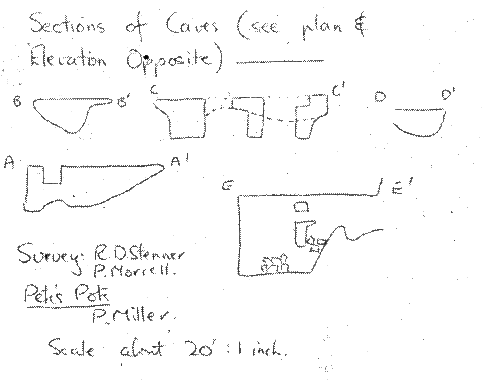
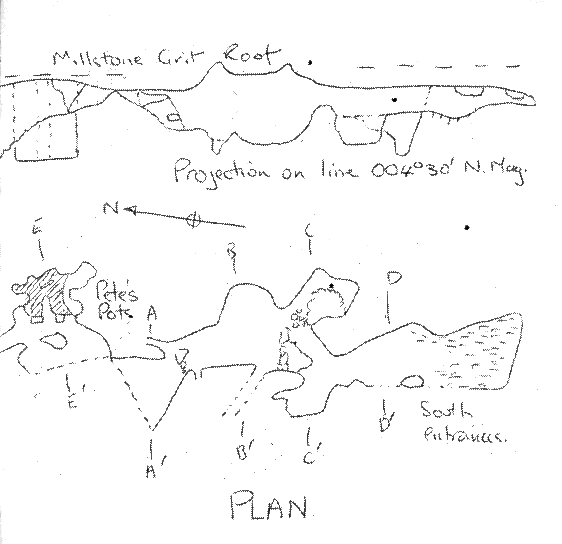
On Monday, 12th August, Pete Miller, Paul Morrel and I set
up our tents close to Porth-yr-Ogof where the river Mellte goes underground at
Ystradfellte. In the evening we met
Peter Bird, who was camping there with Tony Burke, John Higgs and two S.W.C.C.
members, Frank and Douglas Bagueley. Peter had asked for a surveying team to work on a line of small caves on
the limestone/grit junction nearby.
Tuesday morning we got to work, at once intrigued by the
instability of the caves. In the second
cave we surveyed were some well shaped pots, with a 14 foot drop into them, but
I could not manage the climb. A few
yards away, a few rocks were removed and, followed by Doug, I was into a new
cave, the biggest so far. My thumb got
cut when I was caught out by a pinnacle, seemingly as solid as the Bank of
England that fell to bits at a touch. Exploration complete, it was time for food and repairs.
Pete wandered up to the unclimbed pot and traversed across
and around. After a few crashes, Pete
was still at the top, but the floor was a lot nearer with about a ton of rocks
that weren’t there before.
Wednesday, we got back to our schedule by surveying and
photographing both these caves but Pete Bird found another cave and then John
found possibly the biggest of the lot, a cave with a very loose roof and some
good ochre formations. After a diversion
on Thursday for more conventional caving in Pant Mawr Pot, more photography in
the new caves took place on the Friday, then it was back to decent cider
country with the least delay.
The caves themselves have several interesting features. The roof is grit, and the water dripping
through very acid, making circular pots of various sizes. These pots have sharp fluting and pinnacles. I sharpened a pencil on one pinnacle. Thin bands of clay in the limestone and the
absence of dripstone cementing; make the pinnacles likely to topple over at a
touch. The caves grow until the roof
falls in, and the process starts again further in. The caves are formed parallel with the edge
of the grit and many of them have two or more entrances. The water in the caves found to date cannot
be followed far. Connection with
resurgences are unproved. Because of the
acidity of the water, there are no calcite formations. There are formations of ochre and others of
uncertain organic origin.
Let’s re-open a nice safe cave – Tankard. How about it,
Pete?
Ice Formations In Caves
Referring to ice caves in general, they must not be confused
with glacier caves, which are ‘holes’ in glaciers like the glacier cave in
formations while the other has ice only at times.
The entrance of our ‘
lies approximately north and faces a gully which contained at the time a deep
snowdrift. This helped to turn the outer
part of the working into a gigantic refrigerator during the cold spell. The working contained about five hundred ice
‘stalagmites’ which took three main shapes. Most of them were of the ‘Indian Club’ type, while others were shaped
like beer/bottles and others again of a lop sided shape rather like a shark
fin. The average height was about two
and a half feet while the tallest reached four and a half feet. The ‘Indian Clubs’ were about three inches
diameter at the top and narrowed down to about one inch diameter at the slender
middle section.
The fact that there were very few ice ‘stalactites’ confirms
that there must have been a relatively warm current of air near the roof,
probably coming from the inner reaches of the workings, which are quite
extensive. It is also plain that there
was a layer of cold air coming from outside the working which enabled the ice
stalagmites to be formed.
The formation of the ‘Indian Club’ type of stalagmite was
probably due to a warm layer of air at some time partially melting the centre
portion of what were normal stalagmites. The upper part of the club could have been the result of the top melting
as it grew into the relatively warmer air near the roof.
The lopsided or ‘Shark’s Fin’ ice formations were formed in
a brisk current of air, but whether this was cold air causing quicker freezing
on one side, or warmer air causing a partial melt on the other is not certain.
It must be realised, of course, that these are all theories
and that it was more or less impossible to study the exact growth of these
truly wonderful ice formations, so rarely to be seen underground in this
country.
Compiled by Peter F.
Bird. Written by
Cave
Stop Press, Final Word” />
Juta Cave ,
Lebanon
From the cold to the hot, with an
account of a cave in a more reasonable climate
by Bryan Scott.
Twenty miles North of Beirut, the
important gorge into the
the mountains which give this country its name, and cover this cave.
The resurgence gushes from beneath a low arch and is, to say
the least, a heavy flow of water supplying power for a small hydro-electric
station and all the water supply for
itself. Alongside the river is a small
cafe (Cool, draught Almaza) a big car park (fits Chevvys) and a gi-normous
souvenir shop cum ticket desk (5/-). Oh
yes, and the entrance to the cave.
A passage very much like the entrance to Wookey leads down
gravelled steps to the river. This is
flowing from under yet another, low arch on the right and pouring over a
concrete combined dam and landing stage. This dam provides sufficient depth of water in some of the lower
chambers for the large punts in which the tourist trip is made.
The Boatman/Guide/Motive power stands on the prow and shovels
the water with a paddle thing and the punt slowly moves off upstream. The cave consists of a series of large
chambers connected by a very lofty rift. The water depth varies from two to ninety five feet. The whole roof is decorated in the most
impressive fashion and the banks of silt have very slender stalagmites up to
five feet high. The silt supporting
these has in some cases given way under the weight and resulted in ‘Y’ shaped
or curved stalagmites.
The total boat trip is about a thousand metres, after which
the passage becomes too narrow for the punt. The cave continues upstream with waterfalls, low bits, dams and chokes
for a total of 6,300 metres, where progress is halted by a sump.
flying and the fare is £142/10/- return.
Editor’s Note: Which must be added to the cost of entering
the cave, making a total of £142/15/- presumably.
Stop Press
Club members will be sorry to hear that our old friend
‘Sago’ Rice has had a very serious motorcycle accident in which he has lost his
left leg. He is, at the time of going to
press, in,
hospital are asked to get in touch with his mother first at
We wish Sago a speedy recovery and console ourselves with
the thought that, knowing him as we all do, we may feel sure that he will be
amongst us again soon.
A Final Word.
We are glad to see so much caving articles – especially
those which describe new work. On the
other hand, we still have a fair number of articles describing caves in ‘furrin
parts’ in the stockpile – but nothing else. If no inspiration for an article is forthcoming, a letter is always
welcome for publication and gives you the opportunity to put your view in front
of the club generally. You may not always get your contribution printed at
once, but stuff for the stockpile is just as useful and equally valued.
Annual List of Club Members Names and Addresses
This list is the one currently used by the B.B. Postal
Department and members copies of the B.B. are thus sent to the addresses given
below. If yours is out of date, or
incorrect in any way, you are asked to get in touch with Kevin Abbey.
|
528 |
K. Abbey |
15 Gypsy Patch lane, Little Stoke, |
|
306 |
T Andrews |
|
|
236 |
J. Attwood |
|
|
20 |
R.J. Bagshaw |
|
|
392 |
M.J. Baker |
Model Farm, |
|
358 |
D Balcombe |
|
|
546 |
R. Ball |
|
|
290 |
R. Bater |
|
|
214 |
R. Bennett |
3 Russets Cottages, Backwell Common, Somerset. |
|
390 |
J. Bennett |
3 Russets Cottages, Backwell Common, Somerset |
|
451 |
D. |
|
|
417 |
P. Bird |
|
|
364 |
P.M. Blogg |
1 Ridgeway Park, Ridgeway, |
|
336 |
A. Bonner |
Lane End Cottage, Plumbland, Aspatria, |
|
460 |
P.J. Borchard |
|
|
532 |
R.J. Brook |
|
|
320 |
N Brooks |
|
|
551 |
G.A. Bull |
20 |
|
506 |
Miss R. Burnett |
|
|
488 |
M. Calvert |
|
|
429 |
R Casling |
|
|
366 |
B.R. Chamberlain |
|
|
526 |
J. Churchward |
|
|
211 |
Mrs C. Coase |
c/o Lamont, |
|
89 |
S.J. Collins |
33 |
|
|
P. Compton |
29 A.M.Q., R.A.F. Compton Bassett, Calne, |
|
377 |
D. Cooke-Yarborough. |
3 |
|
494 |
J. Cornwell |
|
|
71 |
A.J. Crawford |
3 |
|
405 |
F.G. Darbon |
43 Arthur Henderson House, |
|
464 |
J. Davey |
|
|
350 |
Mrs A. Davies |
|
|
472 |
R. Davies |
|
|
226 |
I Dear |
Tudor Cottage, |
|
449 |
G. Dell |
L/Cpl. 23128511, 28 Coy., C.A.D., Bramley, |
|
164 |
K.C. Dobbs |
|
|
553 |
R. Drake |
|
|
505 |
D.P. Drew |
|
|
325 |
A.J. Dunn |
|
|
331 |
J.A.Etough |
|
|
322 |
B.M. Ellis |
|
|
263 |
D. |
|
|
232 |
C. Falshaw |
|
|
496 |
P.G. Faulkner |
|
|
269 |
T. Fletcher |
The Old Mill House, Parnack, Nr. Stamford, Lincs |
|
278 |
S. Fowler |
34 R.A.F. Compton, Calne, Wiltshire |
|
469 |
K. Franklin |
|
|
468 |
P. Franklin |
|
|
404 |
A. Francis |
Address to follow |
|
470 |
P.M. Giles |
2J6 C.P.O.s Mess, H.M.S. Ark Royal, G.P.O., |
|
434 |
D. |
|
|
478 |
S. Grimes |
|
|
432 |
N.P. Hallett |
Address not known |
|
104 |
M. Hannam |
Address not known |
|
537 |
N. Hart |
|
|
304 |
C.W. Harris |
|
|
519 |
R.P. Harte |
|
|
4 |
D. Hassell |
Hill |
|
480 |
C.J. Hawkes |
|
|
436 |
J.W. Hill |
|
|
387 |
G. Honey |
|
|
406 |
D.W. Hoskyns |
128 |
|
|
R. Howell |
|
|
|
T.G. Hutton |
|
|
97 |
J. Ifold |
Leigh House, Nempnett, Chew Stoke, |
|
150 |
P. Ifold |
Sunnyside, |
|
363 |
M.J. Isles |
|
|
540 |
D. Irwin |
|
|
438 |
Miss P. Irwin |
|
|
555 |
G.M. Jackson |
113 Marissal Road, Henbury, |
|
522 |
R. Jarman |
c/o South Chase Farm, |
|
516 |
V. Jewell |
|
|
51 |
A. Johnson |
Warren Cottage, |
|
560 |
F. Jones |
|
|
486 |
R. Jones |
|
|
285 |
U. Jones |
Marsh Farm, Askem In Furness, Lancs. |
|
439 |
W.F. Jones |
|
|
529 |
Miss V. Jones |
|
|
316 |
R.S. King |
22 Parkfield Rank, Pucklechurch, |
|
542 |
P. Kingston |
|
|
429 |
R. Kinsman, Mrs |
Pond House Farm, Freshford, |
|
413 |
R. Kitchen |
1st Batt. 2 E. Anglican Reg., Mercer Barracks, |
|
456 |
T. Knight |
|
|
260 |
J. Lamb |
Broadmeadows, |
|
|
Mrs J. Lamb |
Broadmeadows, |
|
475 |
|
|
|
495 |
M. Luckwill |
|
|
58 |
G.T. Lucy |
Pike Croft, Long Lane, Tilehurst, |
|
550 |
R.A. MacGregor |
The Railway Arms, |
|
511 |
N. McSharry |
4267236 J/T. 303 S.U., R.A.F., Khormaksar, |
|
561 |
J. Major |
|
|
275 |
C. Marriott |
|
|
416 |
T. Marston |
|
|
106 |
E.J. Mason |
|
|
558 |
A.J. Meaden |
1 Churchfield, Wincanton, |
|
383 |
P.J. Miller |
|
|
334 |
D.W. Mitchell |
|
|
339 |
G. Mossman |
33 Whateleys |
|
308 |
K. Murray |
17 |
|
|
F. Nash, Miss |
15 Iddesleigh Roiad, Redland, |
|
386 |
A. Nash |
23714348 Pte A.G. (Int) H.Q. East African Command, |
|
329 |
T.W. Neil |
Bradley Cross, Cheddar, |
|
330 |
Mrs T.W. Neil |
Bradley Cross, Cheddar, |
|
|
P. Page |
A Squadron, R.A.F. Compton Bassett, Calne, |
|
557 |
D. Palmer |
|
|
396 |
M.A. Palmer |
Cathedral Coffee Tavern, |
|
492 |
Miss S.E. Paul |
Flat H, |
|
|
J. Pembry |
Grove View, Hambrook, Nr. |
|
22 |
L. Peters |
|
|
160 |
N. Petty |
|
|
499 |
A. Philpot |
|
|
56 |
G. Platten |
Rutherfield, |
|
568 |
Miss B. Plummer |
2 Hogarth Walk, Lockleaze, |
|
450 |
G. Pointing |
|
|
337 |
B. Prewer |
East View, West Horrington, Nr. Wells, |
|
342 |
R.J. Price |
|
|
503 |
D. Quicke |
Address unknown |
|
504 |
Mrs D. Quicke |
Address unknown |
|
291 |
D. Radmore |
|
|
481 |
J. Ransom |
15 South View, Lenthay, Sherborne, |
|
358 |
C.H.G. Rees |
|
|
452 |
Mrs Rees |
|
|
552 |
B. Reynolds |
|
|
241 |
A.L.C.Rice |
|
|
343 |
A. Rich |
c/o Pox 126, |
|
|
L. Rihan |
Lilac Cottage, Lamyat, Shepton Mallet, |
|
443 |
R.J. Roberts |
|
|
489 |
Mrs Robinson |
|
|
490 |
G. Robinson |
|
|
157 |
Miss J.P. Rollason |
|
|
240 |
A. Sandall |
43, |
|
359 |
Mrs. A. Sandall |
43, |
|
237 |
B.M. Scott |
Abbotscroft, |
|
482 |
G. Selby |
|
|
508 |
A. Selway |
15 Street Martins Road, Knowle, |
|
78 |
R. Setterington |
|
|
533 |
Mrs R. Setterington |
|
|
213 |
R. Setterington |
|
|
425 |
J. Simonds |
|
|
556 |
C.J. Slavin |
|
|
414 |
C. Smith |
|
|
473 |
D. Smith |
|
|
276 |
J. Stafford |
Wern Isaf, Pethel, Cearns |
|
38 |
Mrs. I. Stanbury |
74, |
|
1 |
T.H. Stanbury |
|
|
547 |
|
Crabtrees, Wraxhill Close, Street, |
|
365 |
R. Stenner |
|
|
381 |
Mrs. Stenner |
|
|
514 |
E.P. Tackle |
29 |
|
284 |
A. Thomas |
|
|
497 |
M. Thomson |
7 New Street, Wells, |
|
498 |
Mrs. M. Thompson |
7 New Street, Wells, |
|
502 |
G. Tilly |
Jable, |
|
74 |
J. Tompsett |
Mallins, |
|
80 |
Mrs. D. Tompsett |
Mallins, |
|
326 |
E. Towler |
5 |
|
544 |
P. Townsend |
|
|
512 |
N. Tuck |
|
|
382 |
S. Tuck |
|
|
462 |
Mrs. S. Tuck |
|
|
175 |
D. Waddon |
32 Laxton Close, |
|
|
J.K. Waldron |
|
|
79 |
R.M. Wallis |
|
|
536 |
R.E. Webster |
|
|
538 |
C.D. West |
|
|
539 |
R.A. West |
|
|
525 |
D. Weston |
|
|
441 |
G.O. Weston |
|
|
442 |
Mrs. G. Weston |
|
|
397 |
M. Wheadon |
|
|
553 |
R. White |
|
|
|
A.E. Whitcombe |
Address to follow |
|
520 |
C. Wildgoose |
|
|
549 |
A.J. Williams |
54 Crossways, Roggiett, |
|
|
L.J. Williams |
2 East Grove, |
|
509 |
R. Wilmut |
|
|
559 |
B. Wilton |
22 Wedmore Vale, Knowle, |
|
518 |
J.G. Wolff |
Roughdown, Clevedon Walk, |
|
418 |
E.A. Woodwell |
Address to follow |
|
501 |
A.M. Wring |
|
|
477 |
R.F. Wyncoll |
9 St. Christians Croft, |
Correngenda. (Sorry,
Corrigendum)
Dick Cooke-Yarboroughs address, which was originally
written as Tony Crawfords address in error, owing to a sudden attack of
stupidity on the part of the editor should read: –
Cook-Yarborough, D. The Beeches,
Glos.
*****************************************
Did you approve of the B.B.
As it appeared
in ’63?
Or
would you like to see far more
Good articles in ’64?
Now if
the latter bit is true – The remedy is
UP TO YOU
*****************************************
THE BELFRY BULLETIN. Secretary: R.J. Bagshaw,
Wells Rd
4
Editor, S.J. Collins, 33
8.
Postal Department, K. Abbey,
Gypsy Patch Lane